
Rapid response and stabilization
We focus first on stopping active damage: extracting standing water, protecting floors, and setting the space up for controlled drying.
Serving Austin, Texas & surrounding areas
When water gets into floors, walls, or cabinets, time matters. Our local team responds fast, isolates the wet area, removes damaged materials when needed, and uses professional drying to help prevent secondary damage and mold.
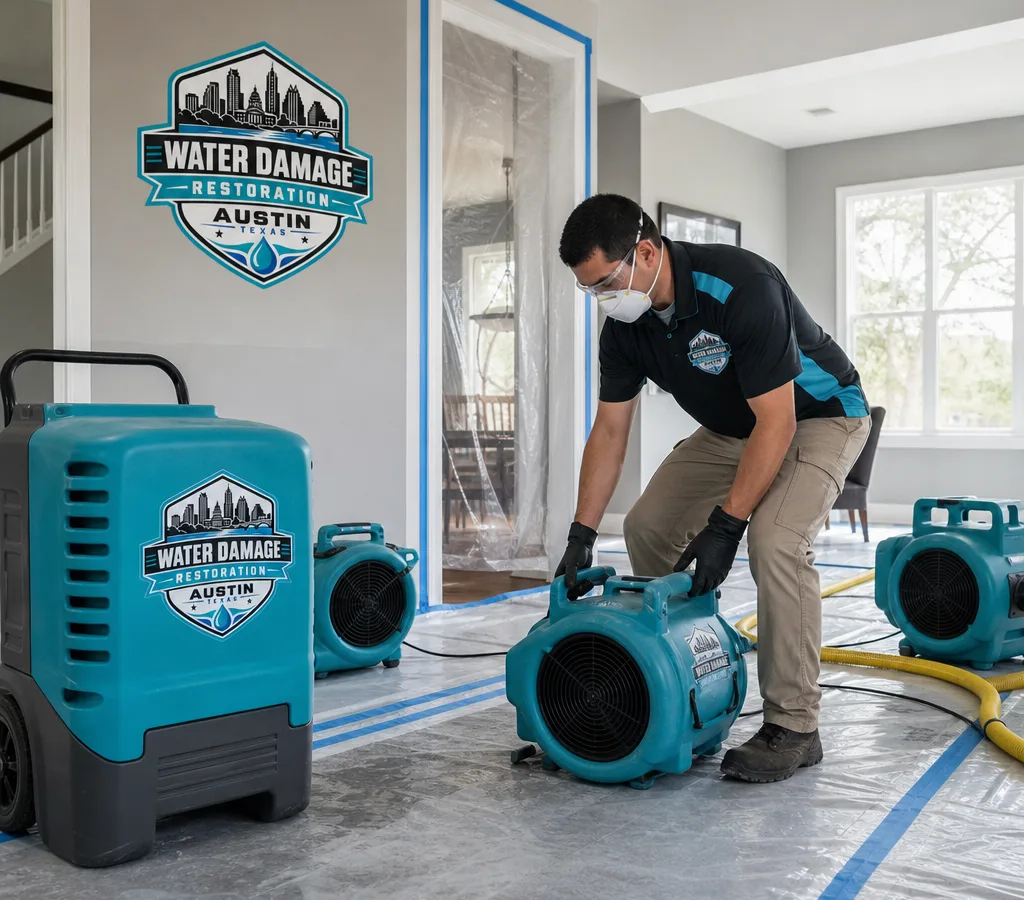
Water remediation is the full set of steps used to stop water damage from spreading, dry the structure correctly, and return the area to a safe, clean condition. If you found us by searching water remediation Austin, you're likely dealing with wet drywall, swollen baseboards, soaked carpet pad, or water that migrated under flooring.
A real remediation plan is built around three things:
In Austin homes and small commercial spaces, we often see both slab-on-grade and pier-and-beam foundations. In either construction type, trapped moisture can remain under flooring, behind cabinets, or inside wall cavities. The goal is controlled demolition only where necessary, aggressive drying where safe, and documentation showing the area is actually dry.
Every job starts with containment and a clear plan. For clean-water events, we focus on extraction and structural drying. For contaminated water, we prioritize safe removal and cleaning before any rebuild decisions.
Typical work on a water remediation Austin TX project includes:
Austin's heat and humidity can work for you or against you. Hot air alone does not equal drying. Dehumidification and airflow pull moisture from materials while controlling humidity in the space.
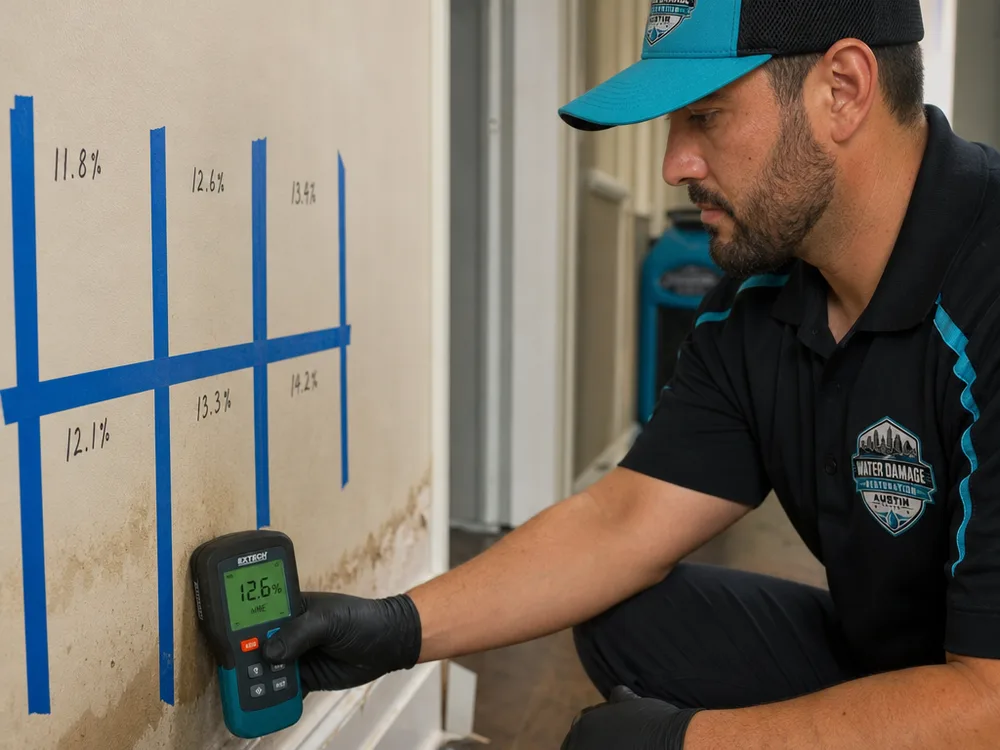
We focus first on stopping active damage: extracting standing water, protecting floors, and setting the space up for controlled drying.
You'll get a written scope that explains what we're drying, what needs removal, and what needs monitoring so decisions are easier.
We track moisture in materials over time. That helps prevent premature closing of walls or reinstalling floors over damp sublayers.
When water is unsanitary, we use appropriate PPE, containment, and disposal practices to reduce exposure risk.
We document affected areas, equipment placement, and drying progress so your claim file has the details it typically needs.
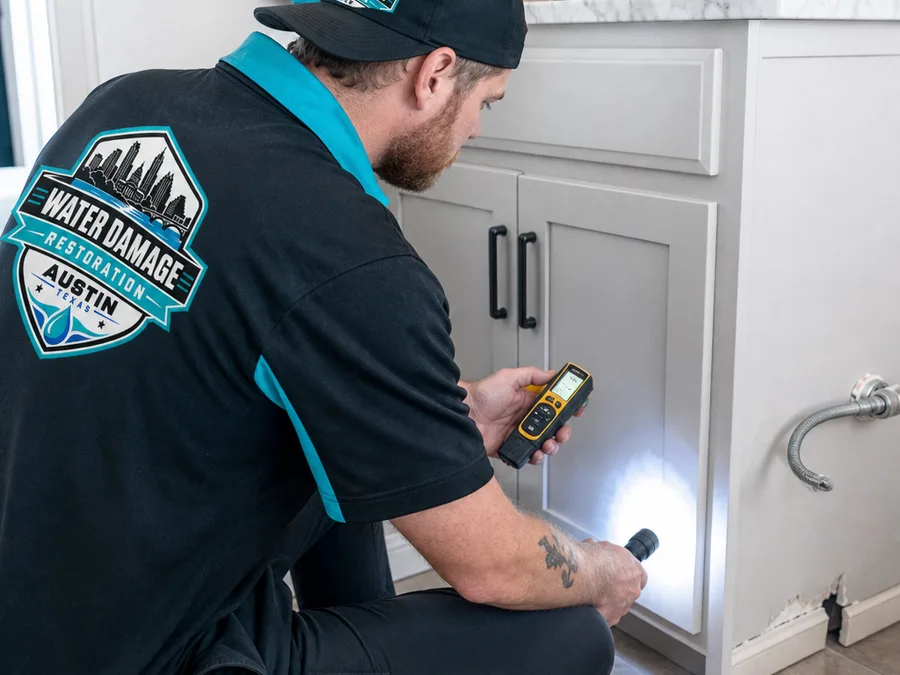
We identify the likely water path, check adjacent rooms, and note safety concerns such as saturated ceilings, electrical exposure, or suspected contamination.
We remove as much bulk water as possible and protect unaffected areas with plastic, floor covering, or containment when needed.
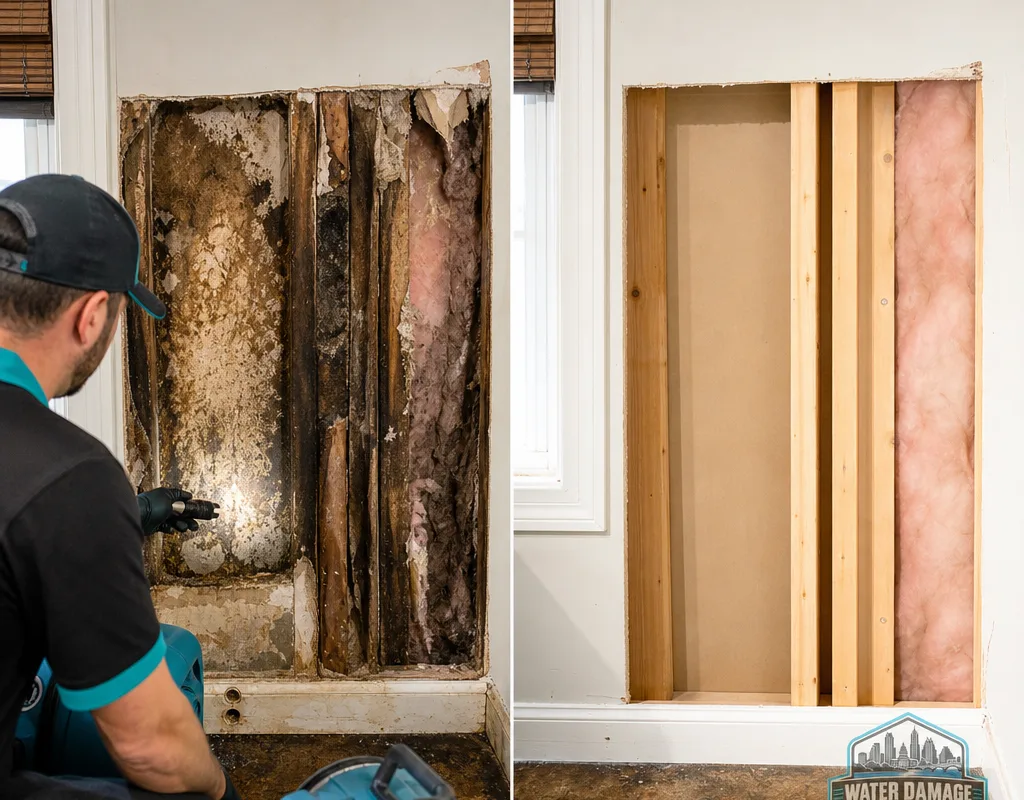
If pad, insulation, or drywall cannot be dried safely, we remove it in a controlled way so the remaining structure can dry efficiently.
We place air movers and dehumidifiers based on the footprint and materials involved, then set target conditions for temperature and humidity.
We re-check readings and adjust equipment as the wet zone shrinks. Drying is complete when materials return to an appropriate dry standard for the structure.
Water remediation in Austin typically ranges from about $900 to $6,500+, depending on how far the water spread and what materials are affected. A small clean-water issue limited to one room often lands on the lower end, while multi-room structural drying with drywall removal, containment, and antimicrobial work trends higher.
Final cost depends on the category of water, square footage, how long the water sat, flooring type, cabinet involvement, access, and monitoring visits. Exact pricing is confirmed after an on-site inspection and moisture map.
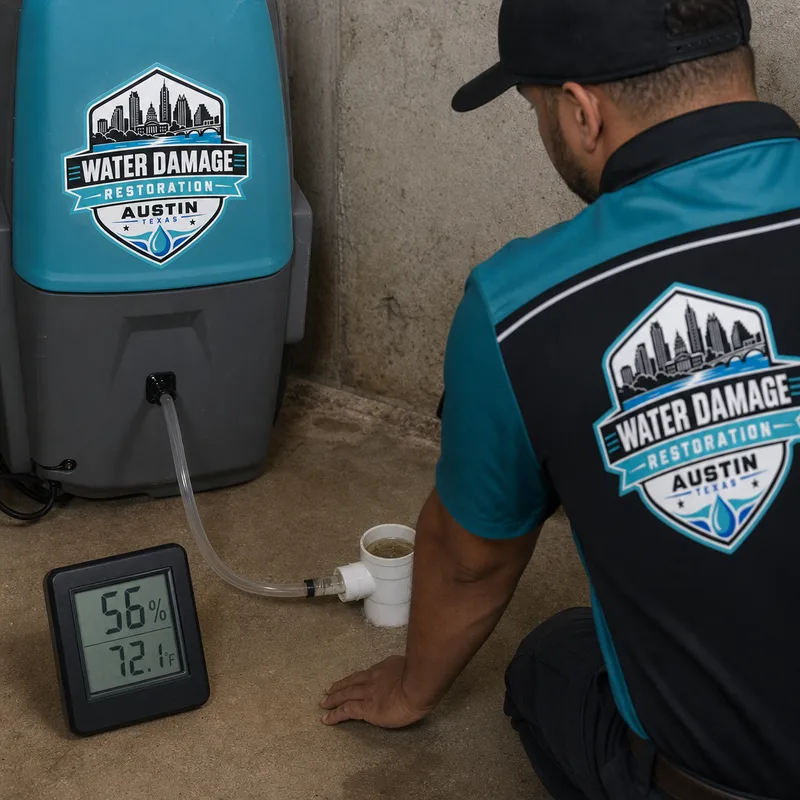
A good remediation plan accounts for how buildings are put together locally and how quickly damage can compound.
Water Damage Restoration Austin handles water remediation with measurement-based drying, clear scopes, and documentation supporting the next step, whether that is repair work or an insurance claim.
Request Emergency ServiceIf your floors feel spongy, drywall is soft, or there's a musty odor after a leak, the best next step is an on-site moisture map and a written remediation plan before you close anything back up.
Start water remediation as soon as you can because water keeps migrating and materials begin to swell and delaminate quickly. The first visit focuses on extraction, mapping the hidden wet areas, and setting drying equipment so moisture does not sit in wall cavities or under flooring.
Not always, but drywall is often removed when the bottom edge is saturated, insulation is wet, or water is trapped in the cavity. A controlled flood cut can be the safest way to dry framing correctly and reduce the chance of lingering odor or microbial growth behind the wall.
Mitigation focuses on stopping additional damage right away, while remediation includes the full cleanup and drying steps needed to return the area to a safe condition. In practice, most jobs combine both: extraction and stabilization first, then drying, cleaning, and verification.
Often yes, especially when the affected area can be contained and the water was clean. If contaminated water is involved or a large portion of the home needs drying and demolition, it may be more comfortable to stay elsewhere until the air, noise, and access are manageable.
A musty smell can linger if moisture remains inside materials or if porous items were left wet too long. Proper remediation includes drying verification with moisture readings and, when appropriate, cleaning and antimicrobial steps so the odor source is addressed instead of masked.
Yes, we can provide the documentation insurers typically request, such as photos, moisture maps, equipment logs, and a written scope of work. Coverage depends on your policy and the cause of loss, so we focus on clear records that support the claim review.
Tell us what happened and what areas are affected. We'll schedule an on-site inspection, map moisture beyond what you can see, and lay out the fastest path to a clean, dry structure.