
Water removal and controlled drying
Extraction, targeted air movement, and dehumidification based on moisture measurements. Drying is monitored until materials reach safe levels for repair.
Serving Austin, Texas & surrounding areas
Get fast cleanup, careful drying, and lasting repairs that stop water from turning into mold, odors, or warped materials. Our licensed team documents the damage, explains the options, and restores your home with a clear scope before any work starts.
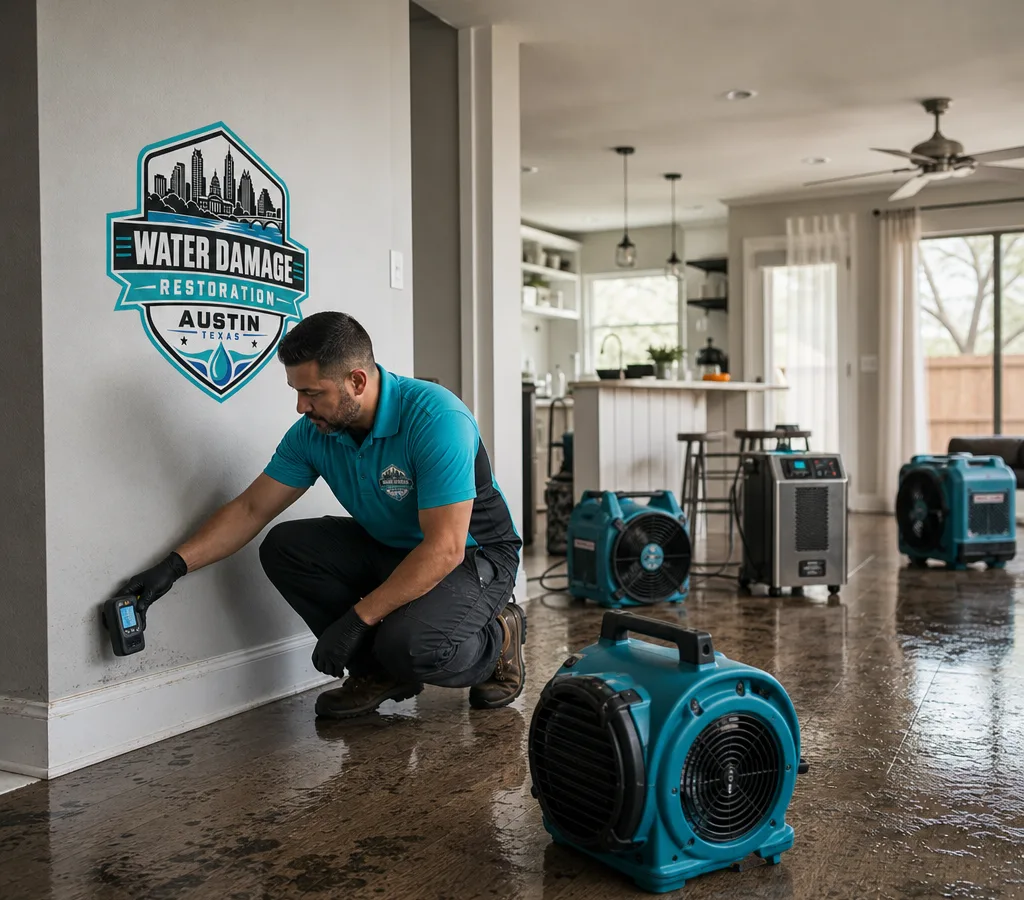
When water gets into flooring, drywall, cabinets, or insulation, the visible puddle is only part of the problem. Moisture wicks up walls, travels under baseboards, and settles into subfloor and framing. If that moisture is not measured and dried correctly, repairs can fail later with swelling, cracking, staining, and musty odors.
Our approach to water damage repair in Austin starts with stopping the source, mapping moisture, and drying the structure before we rebuild finishes. You get a written plan you can understand: what can be saved, what needs removal, what the drying targets are, and what the repair scope includes.
Texas heat and humidity can make drying feel faster than it is on the surface. We rely on moisture readings—not just appearance—to confirm materials are dry enough for repairs, then put the home back together with clean, code-appropriate materials and a finish that matches the surrounding area.
Extraction, targeted air movement, and dehumidification based on moisture measurements. Drying is monitored until materials reach safe levels for repair.
Removal of affected drywall, baseboards, insulation, and flooring only where it is required to dry and restore properly.
Cleaning and antimicrobial treatment where appropriate after a water event, plus odor control steps when porous materials were impacted.
Drywall patching and texture blend, paint matching, trim replacement, subfloor repairs, and flooring and cabinet repair coordination when feasible.
Photos, moisture logs, and clear line-item scope notes that help support your claim without padding or guesswork.
You know what happens next, what needs to dry before it can be rebuilt, and what timelines depend on access, materials, and approvals.
A fast patch job can hide water instead of fixing it. If drywall is closed up while cavities are still wet, the moisture can feed microbial growth and break down materials behind the finish.
We use industry-standard moisture meters—pin and pinless, depending on the material—to locate wet areas, then set drying equipment to match the room layout. In real homes, airflow and dehumidification work differently in a tight bathroom, a kitchen with toe-kicks, or a living room with multiple exterior walls.
Once drying goals are met, repairs move forward: replacing removed drywall, reinstalling trim, blending texture, and restoring paint so the repaired area does not stand out. If flooring was affected, we’ll explain whether it can be dried in place or whether sections should be removed to protect the subfloor.
If you are comparing companies for water damage restoration in Austin →, ask how they confirm a space is dry enough to rebuild. The answer should include moisture readings and documentation, not just time on fans.
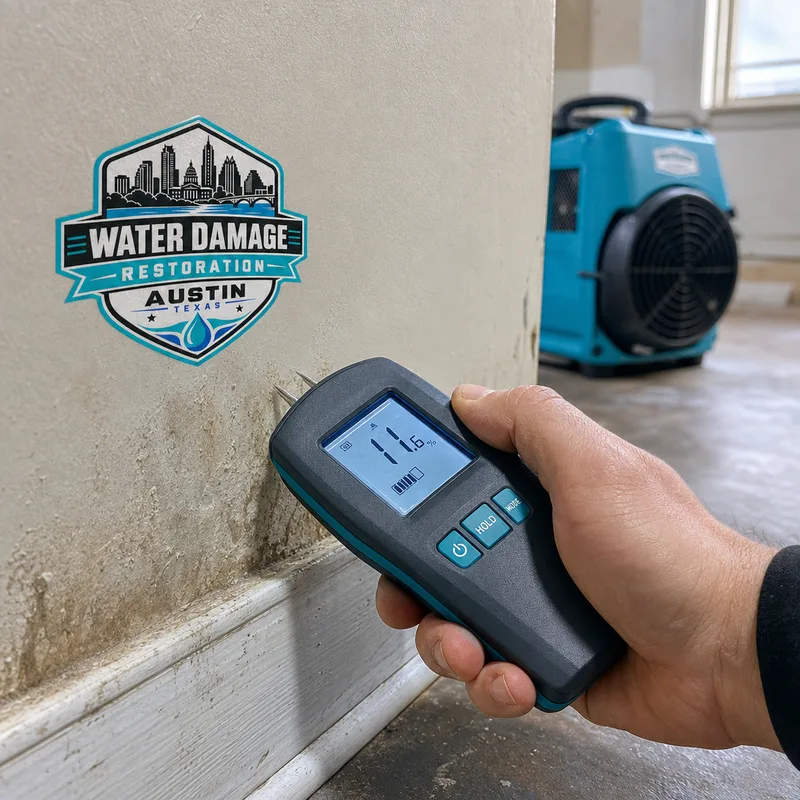
We help you stabilize the situation: shut off the water source if possible, identify any electrical concerns, and determine what areas should be avoided until they are dry and safe.
We map affected materials, check under flooring and behind baseboards where water commonly travels, and outline what can be dried versus what must be removed.
We remove standing water, set air movers and dehumidifiers, and establish containment if needed to keep dust and humidity from spreading to clean areas.
Daily or scheduled checks track moisture reduction and equipment performance. This step is what prevents premature rebuilds and repeat damage.
After drying, we complete the rebuild: drywall, trim, paint, and any related repairs needed to return the space to pre-loss condition.
Water damage shows up differently depending on the home and where the leak or overflow occurred. In Central Austin, many houses have multiple remodel layers, which can hide older plumbing connections and create paths for water to run behind newer finishes. In South Austin, slab-on-grade homes often show water migration at the edges of rooms where flooring meets exterior walls, so we pay close attention to baseboards and subfloor transitions.
In neighborhoods with a mix of older and newer construction like Hyde Park and Mueller, we see everything from small supply-line leaks that soak a vanity cabinet to appliance failures that flood an entire first floor. Downtown and along the I-35 corridor, condo water events often involve shared walls and floors, which makes controlled drying and documentation especially important.
No matter where you are in Austin, the core goals stay the same: remove wet materials that cannot be saved, dry what can be dried, clean and treat affected surfaces, and rebuild in a way that does not trap moisture. If you have already filed an insurance claim, we can align the repair scope with the adjuster’s expectations and provide photos and moisture logs that support what was needed.
Water damage repair in Austin typically ranges from about $900 to $6,500 for many residential situations, with small single-room repairs at the low end and multi-room drying plus rebuild work at the high end. A minor supply-line leak with limited drywall and baseboard replacement often stays closer to $900 to $2,500, while a kitchen or living-area loss with flooring, cabinets, and extended drying can run $3,000 to $6,500+.
Final price depends on the category of water, how far it traveled, what materials are affected—drywall, insulation, hardwood, tile, or cabinets—access to wet cavities, and how long drying must run before repairs begin. The exact cost is confirmed after an on-site inspection and moisture mapping.
“After a water heater leak, they didn't rush into patching. They measured moisture along the wall and under the flooring, explained what had to come out, and kept us updated until it was actually dry. The repairs blended in and you can't tell where the wall was opened.”
“We had water under the laminate that looked fine on top. Their inspection found the wet areas and they handled drying and the rebuild without turning the whole house into a construction zone.”
Start mitigation and drying as soon as you can, ideally the same day, because moisture can wick into drywall, insulation, and subflooring within hours. In Austin's humid conditions, enclosed cavities can stay wet even when surfaces look dry, so early moisture mapping and controlled drying usually reduces the amount of material that must be removed.
Sometimes, yes, but only when moisture readings show the drywall and the wall cavity can be dried effectively from the room side. If insulation is saturated, the cavity has trapped moisture, or the drywall is swollen or crumbling, selective removal is usually required to dry the structure and prevent odor and microbial growth.
Cleanup focuses on removing standing water and drying materials, while water damage repair is the rebuild work that restores the area after it is dry. A proper Austin water damage repair plan includes both: drying verified by moisture readings, then drywall, trim, paint, and any flooring or cabinet repairs needed to return the space to normal.
Yes. We provide photos, moisture documentation, and a clear scope of what was affected and why certain materials needed removal or extended drying. Every policy is different, so coverage depends on the cause of loss and your specific terms, but strong documentation makes the process smoother.
Many projects involve 2 to 5 days of drying, followed by 1 to 7+ days of repairs depending on how much material was removed and what finishes are involved. Timelines can extend when specialty flooring or cabinetry is impacted, or when approvals and scheduling are needed before rebuild work starts.
Shut off the water source if you can do so safely, avoid rooms where water may contact electrical outlets or fixtures, and move valuables away from wet areas. Then arrange for professional mitigation and an inspection so the wet materials are identified and dried before repairs begin.
Tell Water Damage Restoration Austin what happened and where the water traveled. We'll inspect, document moisture, and give you a clear plan for cleanup, drying, and repairs that protect the rest of your home.