
Clear scope before work begins
You get a written plan that identifies affected areas, the containment approach, what materials are being removed, and what gets cleaned, so expectations are set early.
Serving Austin, Texas & surrounding areas
If you smell a musty odor, see staining, or have had recent moisture, our certified team can inspect, contain, remove, and verify cleanup with a clear scope and schedule for homes and businesses.
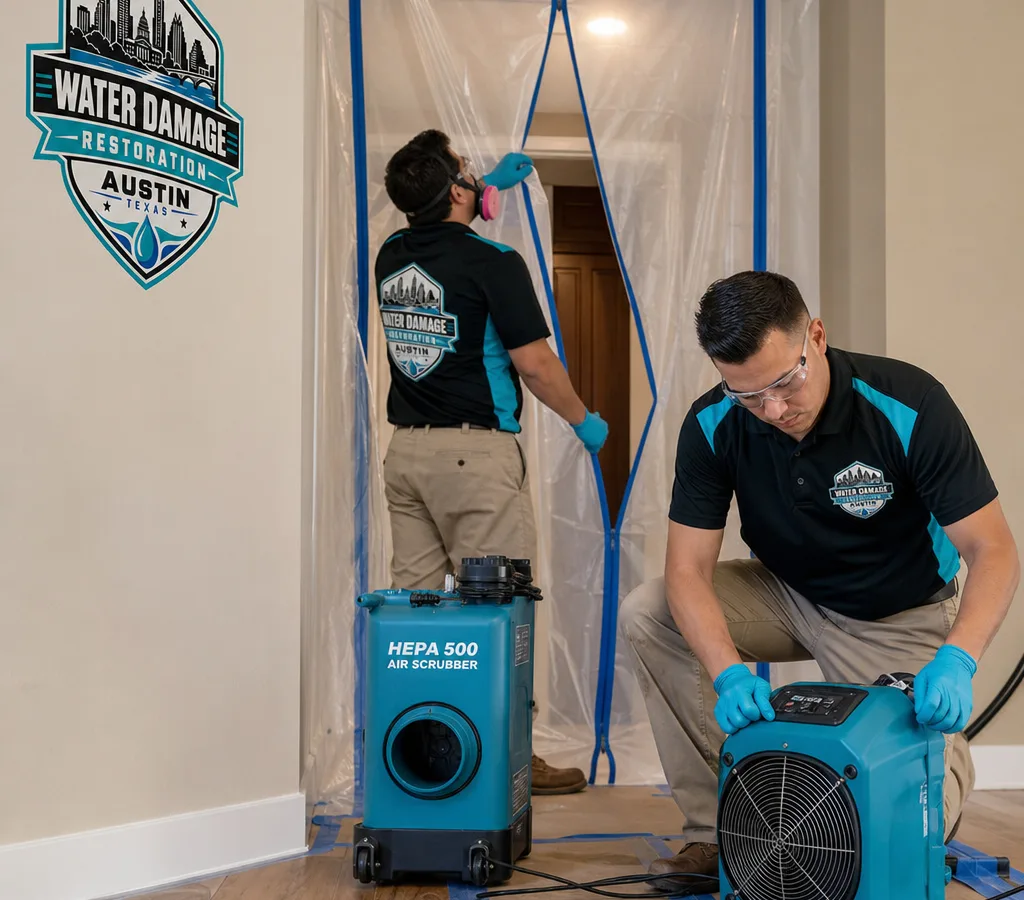
When people search mold remediation Austin, they are usually dealing with two urgent questions: “Is this dangerous?” and “How fast can it be fixed without tearing up more of the house than necessary?” Mold is a moisture problem first. In Austin, humid weather and sudden heavy rain events can keep building materials damp long enough for growth to take hold, especially inside wall cavities, around windows, under flooring, and in HVAC returns.
Water Damage Restoration Austin handles mold inspections and removal with the same priorities you want in your home or business: source identification, tight containment, proper HEPA filtration, and verification that the affected materials are actually cleaned or removed. We document what we find, explain the options, and write a scope that matches what is on site, not a generic checklist.
If your mold situation started after a leak, overflow, or storm intrusion, it often makes sense to coordinate both moisture correction and cleanup together. Many clients begin by addressing the moisture event through water damage restoration in Austin and then move into remediation once the affected areas are safe to open and treat.
A proper mold remediation job is controlled demolition and cleaning, not just spraying a chemical and repainting. That matters because disturbed mold can spread through air movement and settle into adjacent rooms.
Typical scope elements include:
What we avoid: masking odors, fogging as a substitute for removal, and leaving hidden damp materials in place. You should be able to ask how containment will be set, what filtration will be used, and how materials are selected for removal or cleaning.
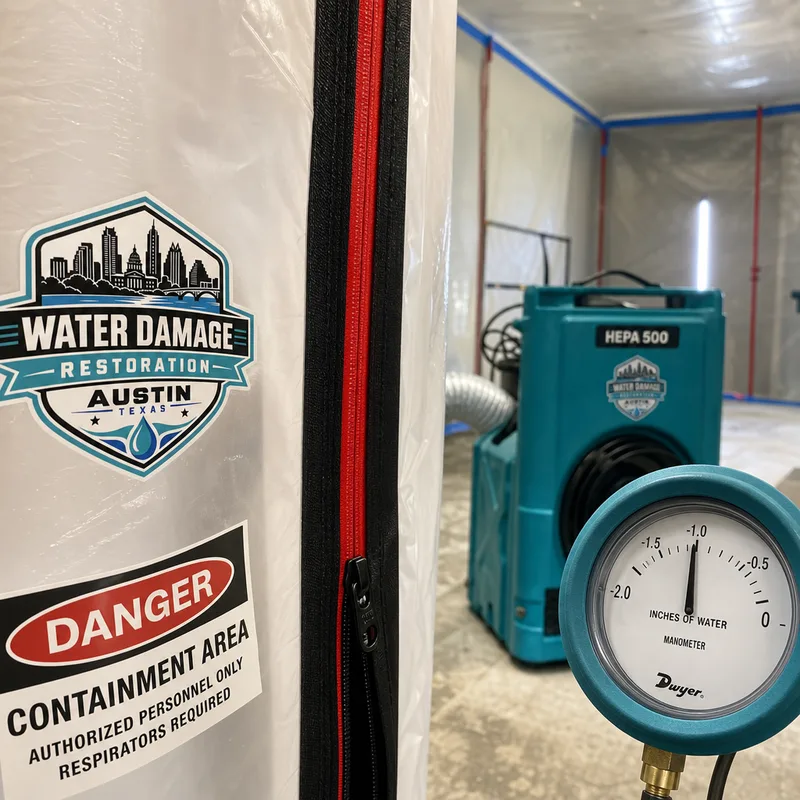
You get a written plan that identifies affected areas, the containment approach, what materials are being removed, and what gets cleaned, so expectations are set early.
We prioritize isolating the work area with barriers and negative air to limit spread through adjacent rooms and return air pathways.
HEPA air scrubbers and HEPA vacuuming are standard tools, along with cleaning methods matched to the surface and contamination level.
Whether it is a home, rental, office, or retail space, we plan work to reduce downtime and protect occupied areas.
Mold comes back when moisture remains. We explain what needs to change so the cleanup actually lasts.
Mold remediation in Austin typically ranges from about $1,000 to $3,500 for a small, contained area, while larger or multi-room projects often run $4,000 to $12,000+ depending on how much material must be removed and rebuilt. Small jobs might involve a single wall or closet; larger jobs can include multiple rooms, attic insulation, or widespread growth after prolonged moisture.
Final price depends on the affected square footage, where the mold is, how complex containment is, and how much demolition and disposal is required. The exact cost is confirmed after an on-site inspection and written scope.
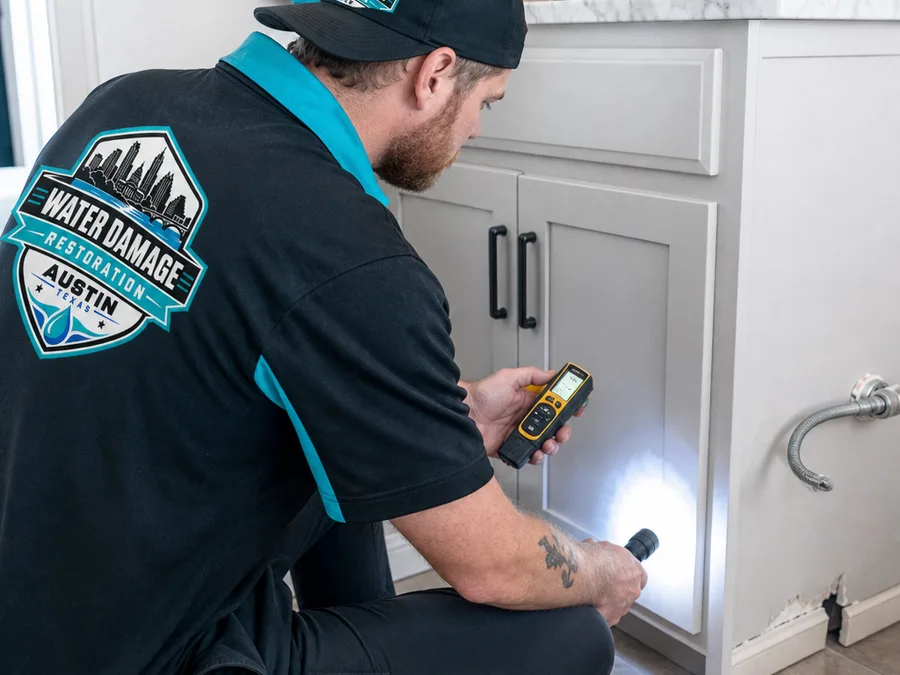
We review visible growth, odors, and recent leaks. Moisture readings help locate damp materials so remediation targets the source area instead of only what can be seen.
We isolate the work zone with plastic sheeting and establish negative air pressure when needed. HEPA air scrubbers run during removal and cleaning.
We remove materials that cannot be cleaned to a reliable standard. Debris is bagged out from the contained area to limit tracking contamination through the property.
Remaining framing, sheathing, and surfaces are HEPA-vacuumed and cleaned, with attention to edges, fasteners, and rough surfaces where spores collect.
We confirm the area is dry enough for repairs, review the conditions that caused the problem, and provide guidance on preventing recurrence after reconstruction.
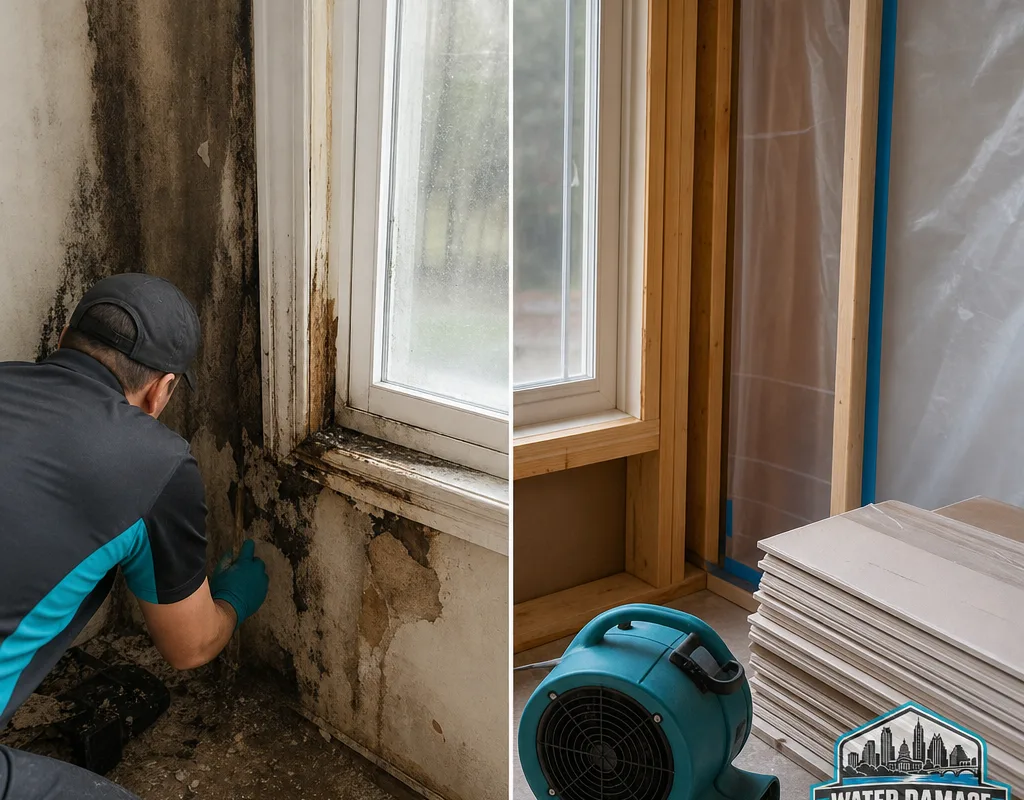
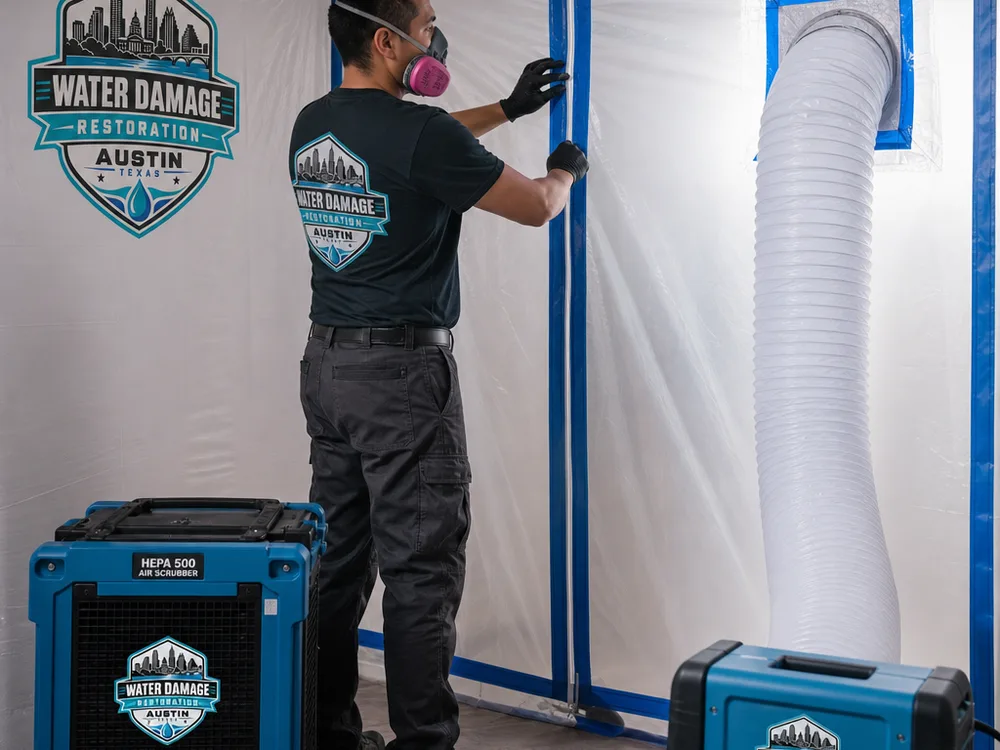
Most mold remediation projects take 1 to 3 days of on-site work for a small to moderate area, while larger, multi-room or attic jobs can take longer. Timeline depends on containment, demolition, and whether drying is required before replacement.
Sometimes, but only when the affected surface can be cleaned reliably and growth has not penetrated porous materials. Contaminated drywall, insulation, or carpet pad usually requires removal because those materials do not clean reliably enough.
Testing is not required for every job, but a professional inspection is. Testing is more useful when species identification or third-party documentation is needed, or when symptoms exist but the source is not obvious.
Many jobs can be completed with occupants present when containment and negative air controls are properly used. Temporary relocation from the work zone may be recommended when main living areas, HVAC systems, or multiple rooms are affected.
Mold returns when moisture returns. Common causes include unresolved leaks, high indoor humidity, poor bathroom or kitchen ventilation, and water intrusion at windows or exterior walls.
Yes. Commercial remediation focuses on isolating occupied areas, managing airflow through shared spaces, and planning work to reduce downtime while maintaining proper containment and cleaning standards.
Tell us what you are seeing and where it is happening, and we will schedule an inspection, explain the next steps, and provide a written scope with straightforward pricing and timing.